SaldoCerto
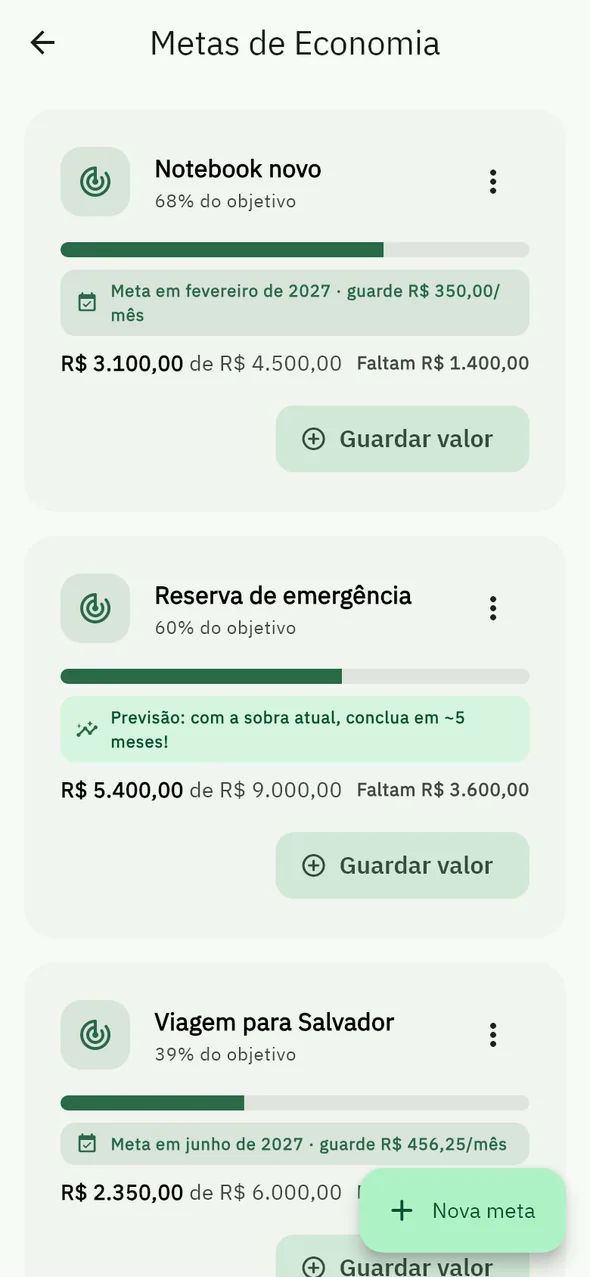
Flutter personal-finance app built around your salary: category budgets, expenses, fixed bills and goals. Offline-first, on Supabase with RLS, with an AI assistant that never sees your numbers.
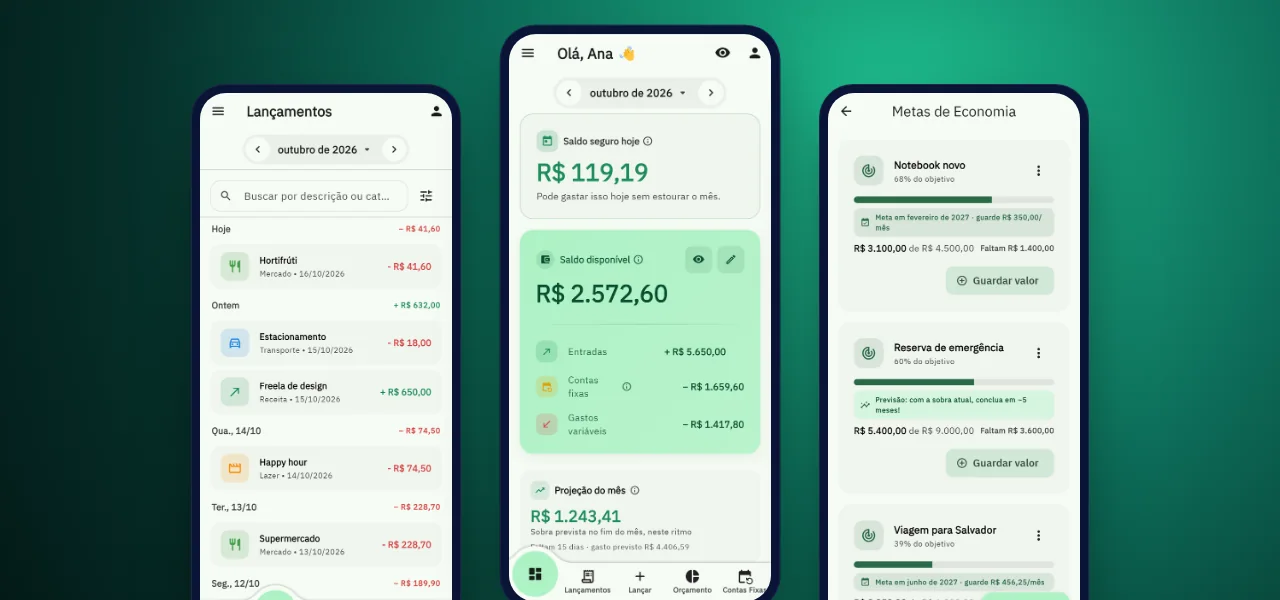
// Overview
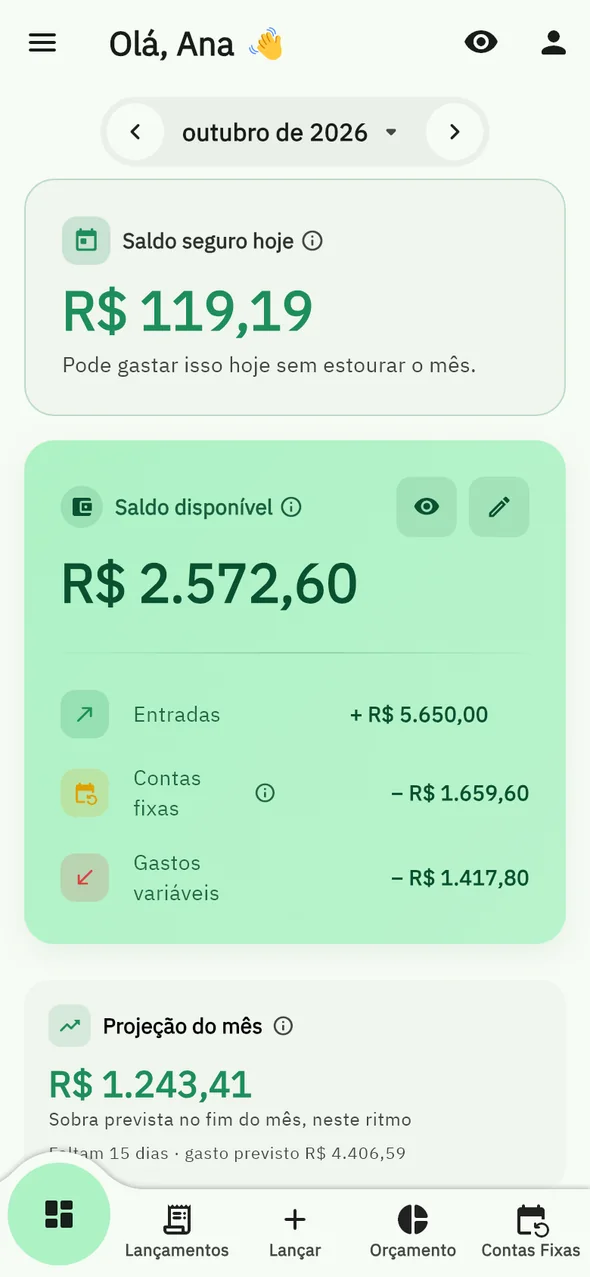
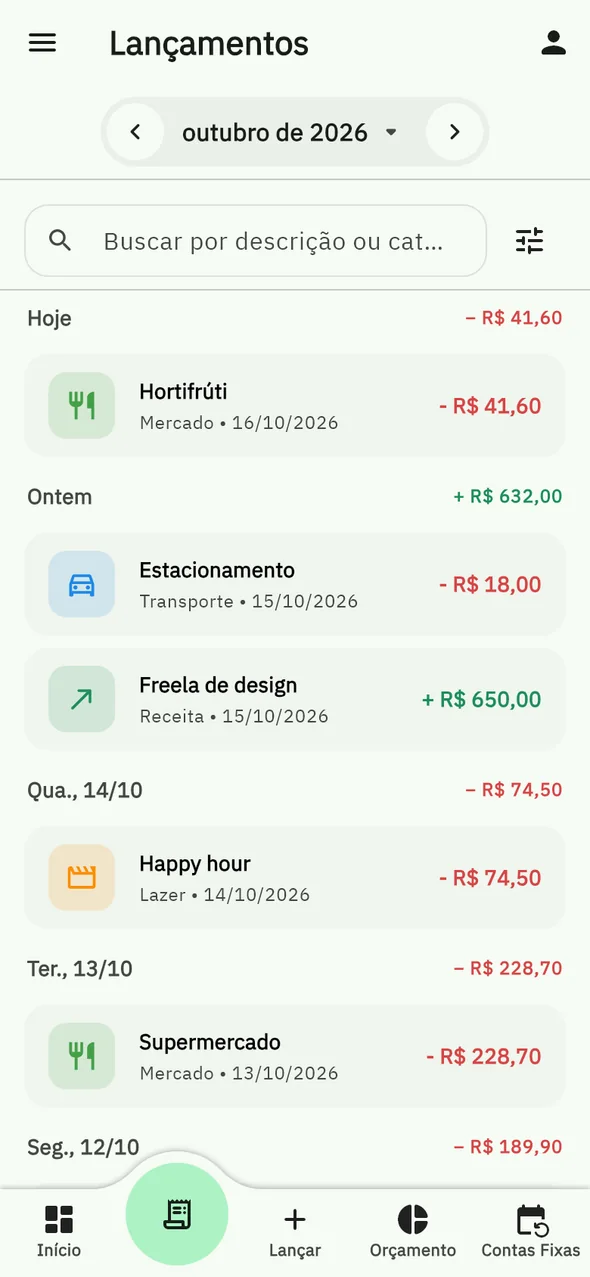
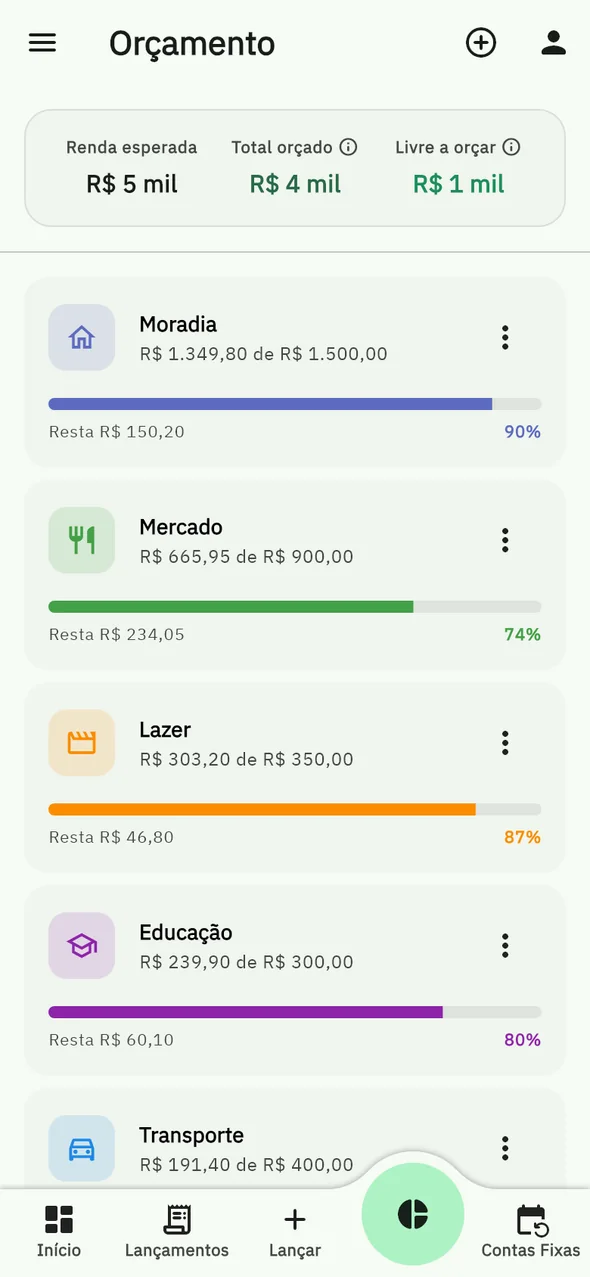
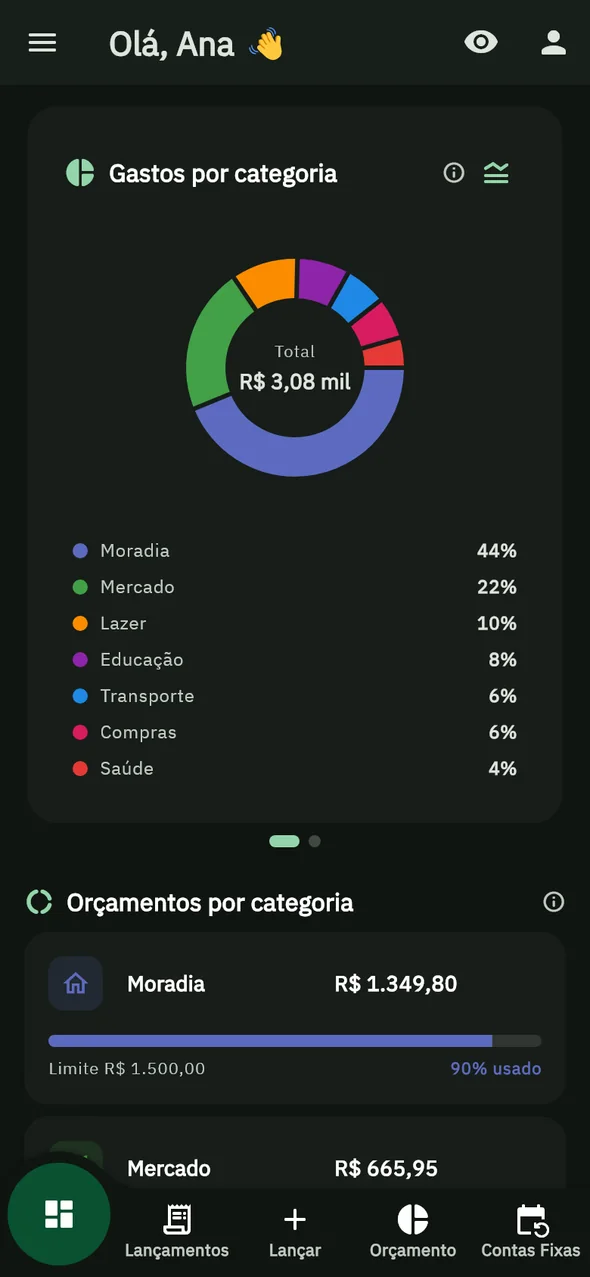
A Flutter app that organizes your finances around your salary: the month's income is split into budget categories, expenses and fixed bills are logged, and a chart dashboard shows how much is actually left.
// The challenge
Money tracking fails in two places. The first is the moment of the expense: at the store or on the bus, with no signal, an app that needs the network just doesn't record it. The second is privacy: an AI assistant that reads your finances is a question of trust before it is a feature.
// Constraints
Record the expense where it happens, including with no signal — and no financial figure may ever reach an AI model.
// Engineering decisions
Offline-first
- Choice
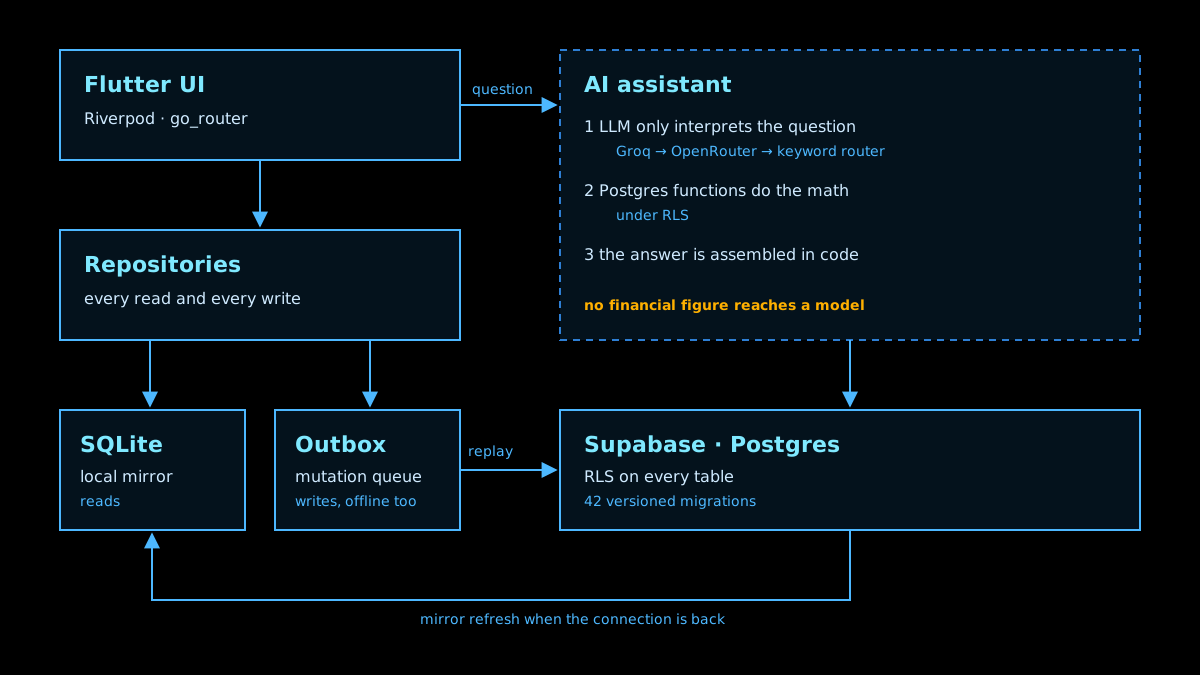
- a SQLite mirror of the Supabase data and a mutation queue (outbox) that every repository goes through.
- Why
- expenses are logged where there is no signal — at the store, on the bus.
- Trade-off
- more sync complexity, in exchange for the app never refusing a record.
AI without financial data
- Choice
- the model only interprets the question; the math runs in Postgres functions under RLS and the answer is assembled in code.
- Why
- an assistant that reads your finances is a question of trust before it is a feature.
- Trade-off
- the assistant only answers what the database functions can compute.
// The solution
Real offline-first: a SQLite mirror of the Supabase data and a mutation queue (outbox) that every repository goes through — a write made without network is queued and replayed when the connection returns. On the server, Postgres with RLS on every table. The assistant uses LLMs only to understand the question, in a free cascade with fallback (Groq → OpenRouter → keyword router); the math runs in Postgres functions under RLS and the answer is assembled in code. No financial figure ever reaches a model.
// Architecture
My role
Sole developer — product, architecture (Riverpod + go_router, 20+ feature modules), database (42 Supabase migrations), tests and the release pipeline.
Tech stack
// Screens
// Outcome and evidence
Version 1.40, with releases automated by Release Please. 88 test files and 550+ test cases, including full-app E2E running on an emulator in CI. The source is private.
- test cases
- 550+
- including full-app E2E on an emulator in CI
- Supabase migrations
- 42
- feature modules
- 20+